Showing posts with label company store. Show all posts

Monday, May 4, 2020

A Company Store Spring


 *Note: This article was written for the Spring Issue of Coumtry Rustic Magazine in 2018. Parts of it are fiction, but it does present the real workings of a company store. As far as I know, Granddaddy never owned a company store, although he did have farm complexes at each of his farms. The store at the historic district was originally built by Granddaddy for the black community in Dell ca. 1919. The rest of the history is true as it was related to me by Mom in the 1990s. 

Permission to reproduce must be granted by Country Rustic Magazine. Link at the bottom of the page.


Story and Photos by Dru Duncan
In Memory of My Grandparents. . .

On a cool spring morning in 1919, Earl Magers stood on the porch of his newest company store. It had only been three years since he and his wife Alice, along with his two toddler daughters, arrived from Missouri to the newly opened farm land in northeast Arkansas.
  
They came in a Springfield covered wagon, drawn by oxen on roads that were little more than logs and mud. All their possessions were in that wagon. The money from the sale of their forty acre Missouri farm was well-hidden among barrels and house goods. On every side of the corduroy road was cut-over forest land, going for as little as fifty-cents per acre. It was the only land that Earl could afford. They were moving from a place of poverty to a farm of hopes and dreams. To an untrained eye, the land was a big gamble. It was nothing but swamp, filled with stumps left by the out-of-state loggers who came through and cut the vast forests. Only a farmer could see the possibilities beyond the present scenery, but Earl knew it would be choice cotton land one day. The soil was said to be so rich a person could plant a broomstick and it would grow. Now the stumps were cleared and the acres upon acres of swamp drained. The fertile farmland was finally ready for planting. He would rely on tenants to farm his land for many years to come, since he had been able to acquire more acres than he could personally work. Earlier in the year he mapped out the forty-five acre plots. He knew then, as now, that when the weather begins to warm after a long cold winter, the farmers are impatient to get into the fields, to plant the 'White Gold' that we know as Cotton. It wouldn't be long before the season began.

Almost one hundred years later, I stand on the same porch, looking out over farmland as far as the eye can see, just as my Granddaddy did that spring day. I'm anxious to hear the giant tractors arrive to plant this year's cotton crop and to smell the sweetness of the rich Delta soil as the discs break ground. The same excited hopefulness for the coming farm year hangs in the air. Yet, as nostalgic as it is on the old company store porch, it's even more so inside.


If you have never visited an old country store, no words can fully describe how it touches the senses. The well-worn wooden floors creak underfoot. A distinct aroma of a wood stove permeates the building, mingling with the scent of kerosene and leather, produce and fresh meat. Brightly colored cans, boxes and bags line the shelves with coffee, flour, sugar, cornmeal, spices, and tobacco. In the spring, bags and barrels of crop seed line the walls, their burlap and paper bags adding an earthiness to the mix.


Spring is the time of new beginnings for the farmer, and our old company store has seen many seasons come and go. Stories from its past seem to linger in the air. It was here that Granddaddy secured contracts with the tenants to farm his company land. A line of credit was also established so that each one was able to buy seed, hoes and farming supplies, knowing that charges would be settled in the fall when the crops were harvested and sold. Tenants couldn't plant their crops without the credit extended them. By spring, the money made from the previous fall was pretty much spent. They would live on credit until another crop was raised and taken to market.


The wives also appreciated the credit as they shopped for items such as wide-brimmed straw hats, sturdy gloves, and possibly a new, cotton everyday wash dress, since the old ones were faded and full of holes. In general, though, country people bought what they couldn't grow, shoot or make themselves. In buying seeds for the home garden, farmer's wives were particularly frugal. Throughout the growing season of the previous year, the ladies saved and dried as many seeds as possible to plant the next year. Okra, peas, squash, green pepper, tomatoes and watermelon seed were among the home inventory. At the top of their 'buy' lists were the seeds necessary to round out their own garden, seeds such as turnip, mustard and collard greens, celery, green beans, eggplant and hybrid corn. They knew far too well that vegetables would feed and nourish their families cheaply throughout the summer. Canning the extra produce would sustain them through another winter. For the farm wife, home gardens meant survival. The storekeeper knew this. In the spring, eye-catching seed boxes with their bright packets were brought to a prominent place along the aisle to tempt even the most frugal gardener. Seeds attractively packaged stimulated more interest and offered visual hope that this year's garden would be generous in produce. Seed boxes were packed according to regional interests and eye appeal, with much competition among various companies such as the Ferry-Morse Seed Company of California, the Shaker Seed Company of Pleasant Hill, or the W. Atlee Burpee Company of Philadelphia. Although the stores made little profit, the colorful open display drew the eye and imagination beyond the everyday staples.


The storekeeper also strategically placed more purchase possibilities among those boxes of seed. Nearby there were the pungent smelling onion sets, seed potatoes, and kitchen herbs in large crates and bins. Bee skeps stacked high were a temptation to spend a few extra dollars, knowing that nothing was better than cotton blossom honey drizzled over hot, buttered biscuits. New and shiny garden tools filled barrels, claiming to make the garden weeding more enjoyable. In the 1920s and on, a visit to Granddaddy's company store was like an adventure. At no other time was the store so well stocked with the promise of a new farming-and gardening-year.


Those days are gone, but Granddaddy's old company store remains the heart of our farmstead, now an historic district on the National Register of Historic Places. As in bygone days, the old store displays items appropriate for the seasons of a former time and teaches private tour groups about our Southern cotton culture. The senses are still touched with the lingering sights, sounds, and smells from decades of seasons coming and going. I often wonder what Granddaddy would think if he could see it now. Not only does the family continue to farm his land, but the history of his hard work and diligence has enriched so many others with our Delta history. I'll have to admit that many times, while working in the still, quiet of the store at the end of the day, I feel he is around, smiling and proud that after almost one hundred years, his legacy lives on.


 Read more of our Delta stories in 2020 with 
a subscription to Country Rustic magazine
or
Buy a copy at bookstores, Walmart or Kroger
or
Catch up on other Delta stories in back issues.
To purchase or subscribe, go to:


Saturday, April 22, 2017

A Daunting Task: Inventory, Repair, and a New Look for the Smith Grocery Museum


One of my very favorite places to hang out and reminisce on a regular basis is our almost 100 year old grocery museum. . .It's hard to believe that the building is that old. . .Built in 1919 by my grandfather Earl Magers, the store was located on Second Street in Dell. Over the years, it was rented by several store owners. Granddaddy owned it until ca. 1956, when he deeded it over to my Mom, my brother, and myself. I have such fond memories of the C A Smith Grocery Store from my growing up years that when we moved the building to Duncan Farmstead, no other name for it was right. I was able to use an old photograph to get the sign as much like the original as possible. 


While the exterior of the building resembles C. A.'s store, the interior does not. We were so blessed to have had so many donations from local people that we wanted to incorporate them into a typical company store. Thanks to Marguerite Brownlee and Marcia Partin, we have wonderful store fixtures and glass displays from the Brownlee Store and one of the early Dell Post Offices down to the postal directory. I cannot thank them enough for allowing us to save this part of Dell history. One of the displays dates back to 1903 and was first used in an early Dell establishment.


To fill those displays, in the beginning, I relied on family items and my collections. . .Now, almost ten years later, we have had numerous donations from friends in the Dell area, as well as others who live further away but knew of our project. We are grateful for each and every donation and have assured the donors that these items will continue on here at the historic district in the future. 


Which brings me to the daunting task at hand. It's time to put things in order and inventory each and every item. While listing our inventory, we are also changing the items within the store to better display all the generous donations and less of the family possessions. . .and to reflect the early 20th century time period. 


When we begin to 'restock' the shelves, our plans are to restore the donated items to their original appearance, as much as possible.. Repair, paint, and polish is in the work ahead of us. But first comes the weeding out of personal collections and family items for an estate sale and the inventory of all that will stay with the Historic District. . .Yes, a daunting task. . .but a definite step forward in protecting our local heritage.


We have a LOT of work ahead of us. . .
and we have several changes to make. . .
but I'm excited about the project, 
 knowing it will all come together. . .one day. . .


Thursday, October 30, 2014

Inside the Company Store: Post a Letter or Make a Deal


During the Depression Era, the Company Store was the place of much activity. . .Here sharecroppers and tenants bought (usually on credit) their seeds and supplies. . . shopped for food and clothing. . .posted a letter or received their order from Sears Roebuck and Company. . .made contracts for farmland. . .to sharecrop or to rent acreage. . .It's the place where everyone met to talk about the crops or hear the latest gossip. . .Notices were posted. . .The latest news was heard on the radio. . .

It's not much different at the Duncan Farmstead today. . .It's the place our groups gather. . .Purchase their candy and other items. . .Learn more information about the Depression Era. . .Maybe get a lesson in Rag Rug Weaving. . .As the Company Store was, it still is. . .The HEART of the farmstead.


The Company Store might also house the Farm Manager's Office. . .Here the farmers met with the 'boss man'--discussing the terms of the sharecropping or tenant contract and the line of credit they needed to carry them and their families through the season. . .until crops were harvested and sold. . .This was called 'the furnish'. . .The manager or land owner sold the crop that the farmers tended and harvested during the year. . .Then they'd meet back in the office to 'settle up'. . .(SEE: Sharecroppers and Tenants ) . . .


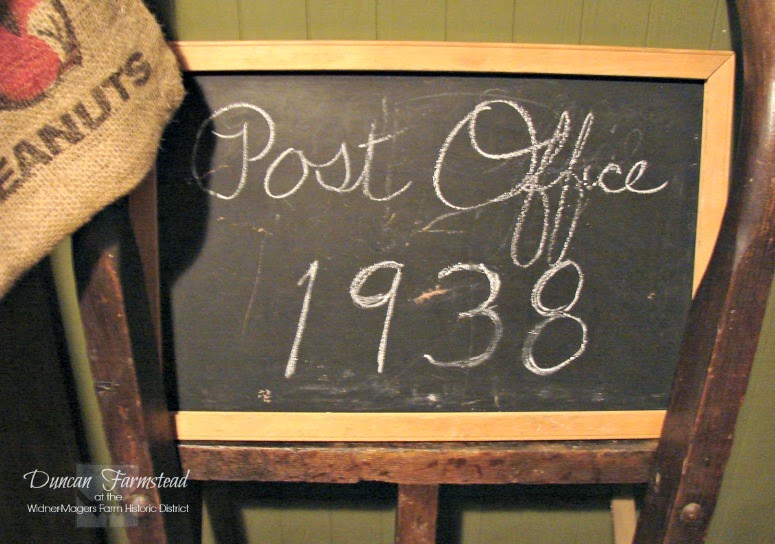
We have Marguerite Brownlee of Dell to thank for our Company Store Post Office. . .She was Postmaster in Dell for many, many years. . .When that facility was up-graded, she had the foresight to store this original Dell Post Office so that it didn't end up in the dump. . .She saved the rent boxes. . .the cage. . .the cubby holes. . .the scales. . .the tables. . .and numerous other Postal Service items. . . They sat in the storage room for many years at Brownlee's Store on Main Street in Dell, waiting for the day to be seen again. . .and that day came a few years ago when the Brownlee Store building had to razed. . .What a surprise it was when Mrs. Brownlee and her family generously offered the vintage Post Office to us. . .We were working on the interior of the Company Store. . .not sure how we'd come up with the displays we needed. . .Of course, we jumped at the chance--knowing that many country and company stores housed the community post office. . .We were so grateful for the opportunity.

 
Other vintage items came from donations and family. . .The Aladin's Lamp was donated by Bobby Hogan. . .The Mule Collar Mirror by Joe Chipman. . .Postal Stamps by Don Davis who also worked for the Post Office in another town. . .The office desk served my Grandmother Duncan for years. . .and Daddy after that. . .His vintage Underwood typewriter sits there. . .It was Daddy's first and last typewriter. . .He never up-graded and used it everyday. . .He said a new one--or a computer--wouldn't know what he wanted to say. . .The drawers still store his office supplies, tapes, and files. . .just as he left them. . .


The 1938 Desk Diary was my Granddaddy's (Earl Magers). . .and the ledgers were found stored in a barn at my parents home. . .


It has taken us years to gather everything and display it for our visitors to enjoy. . .It's been a monumental task. . .but I think it's finally done. . .Now it's time to sit back and enjoy telling the old stories. . .and welcome visitors as they participate in a piece of Delta history.

It's also the place I go to manage our farmstead. . .A place to open mail. . .pay bills. . .enter receipts in the ledger. . .correspond with others. . .The old radio still plays gospel music each morning. . .with news and updates every hour. . .Not so very different from 80+ years ago. . .A simple but busy life style. . .As it was. . .and as it is. . .
LIFE IS GOOD. . .

 
Post Script: My apologies for poor quality of the photos. . .For some reason, it is very difficult to photograph the back office and postal area. . .I suppose there's not enough light?. . .To our 21st century eyes, the colors seem rather dark and forbidding at times. . .but this isn't 2014. . .Nope. . .It's 1938. . .and 'just the way it was'. . .All the newest and best. during the Depression Era.

Thursday, October 9, 2014

Ready for a Sneak Peek Inside the Company Store?


Guess I've teased you long enough. . .I think it's time I give you a peek at what we call our Company Store. . .But first, I need to give you a little history lesson. . .

Most larger farms and plantations in the Delta maintained what was called a Company Store that was located within the farm complex. . .Anyone who sharecropped or worked for the 'company' was expected to buy from that store. . .Often prices were inflated but at the same time, most farm workers didn't have the money to maintain themselves and their family through the year. . .So the Company would issue credit to them and "settle up" when the crops came in and were sold. . .Of course, the Company did all the selling so they could withhold any money to pay the outstanding bills. . .On most farm/plantations, the store might be open to the public also--for cash sales. . .A few plantation stores were warehouses that opened 1-2 days per week only for anyone associated with the farm.

Granddaddy never actually owned a Company Store. . .While he had quite a bit of acreage, his farms were scattered throughout Mississippi Country, each with a farm complex of it's own. . .If a store was located at any of the complexes, it was run by someone not directly connected to the farm. . .but they were required to rent the building from Granddaddy.

In order to preserve a part of our Delta history and to teach visitors the plantation system, we moved the C. A. Smith Grocery from Dell to the Duncan Farmstead. . .The exterior is preserved as it was when C. A. ran the store in Dell. . .The interior is not. . .It reflects a Company Store during the Depression Era. . .

Granddaddy actually constructed the original building ca. 1919 for the black community in Dell. . .Someone in the Magers family has always owned it from 1919 to the present day. . .It was rented to the store keepers. . .Sometime in the late 40s, when mechanization took over the farms and the black community began to leave, C. A. took over the grocery and remained there until he retired ca 1975. . . The building was rented from then on mostly for storage.

When we moved the building to our farmstead, it was nothing but a shell. . .an empty building. . .John did all the carpentry, electrical work, and general renovations. . .It took four years to complete.

Through the generous donations from Marguarite Brownlee in Dell, we have an original Post Office from Dell, vintage glass displays and a wooden counter from the Brownlee Store in Dell, and many other vintage items and displays. Our center display table came from the old Dell School, which was built back in 1935 after a tornado ripped through Dell and destroyed much of the original building.

We have also been blessed by others who have donated a number of goods and pieces of history, including Katherine Bowen of Gosnell,  Doris Bryaens of Gosnell,  Sandra Carpenter of Dell,  Joe Chipman of Manila,  Don Davis of Blytheville,  The Dilldine Farm of Half Moon,  Bobby Hogan of Dell,  and Kenny Jackson of Dell. . .as well as family items from Aunt Mamie Griffin,  Aunt Naoma Gill,  Great Aunt Pearl Magers Sheppard,  Earl and Alice Magers,  Curtis and Irene Duncan,  and our own personal collections.

So with all that said, here's a peek at the inside of our Duncan Farmstead Company Store. . . .You know what you have to do to see the rest. . . .


I'll feature the Post Office in a future post, as well as the Company Office.
but, that's another story for another day. . .
Be looking for it soon. . . . . .
 
LIFE IS GOOD