"Even if she (today's Southern woman) doesn't cook much, there is no more important heirloom than Mama's iron skillet. The iron skillet is THE essential tool of Southern country cooking, and as such it is a prized possession that is passed down from generation to generation, gathering unique character along the way. . ."
Grits Guide (Girls Raised In The South)
I can't imagine a kitchen without cast iron cookware. . .and I cannot envision the older cooks in our family setting up any kitchen without their iron skillets and deep fryers. . .It's just not possible!
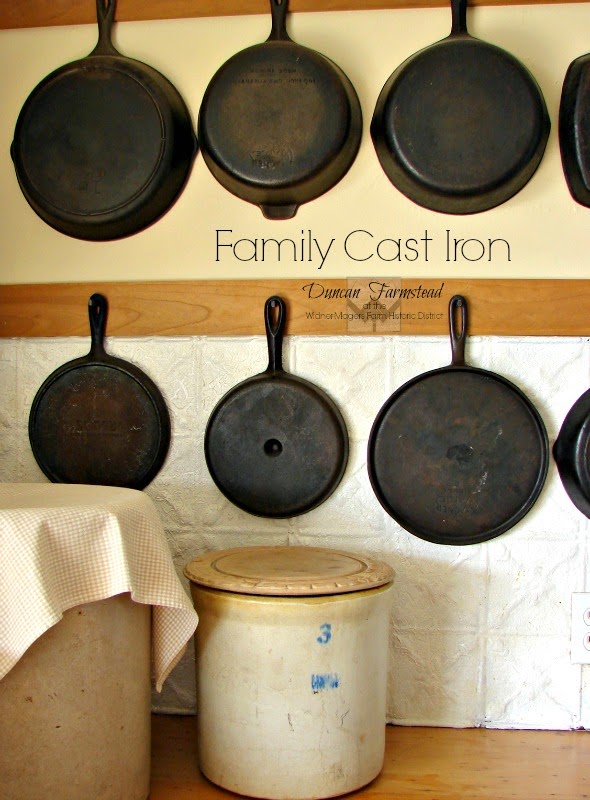
I've been very blessed to have acquired a family collection of coveted iron cookware pieces. . .One entire wall of my farmhouse kitchen is filled with skillets, griddles, and 'chicken fryers' from both my Grandmothers, my Mom, my two Aunts, and myself. . .Every piece has a story. . .Every piece has a purpose. . .And any Delta cook will tell you that no new, expensive shiny cookware on the market will give you the flavor that comes from a cast iron piece. . .I'm convinced that it's one reason there were--and are--so many super Delta cooks.
Good flavor depends on proper seasoning of the cast iron. There's nothing worse than a dish cooked in a sticky, gummy improperly seasoned piece of cookware. Nothing. I know because in my younger, less-informed years I owned a few really bad ones myself. It didn't take me long to seek out an expert on proper seasoning and care of the precious as gold cast iron.
When you purchase cast iron, it will be a medium gray in color. It will have to be seasoned first thing out of the box. Seasoning is the process of applying layers of lard or grease to a new iron piece in order to create a nonstick surface. The process not only keeps food from adhering to the inside of the pan but it also imparts a rich, unique flavor to whatever the recipe. This is why regular cookware can't compare--the FLAVOR just isn't there.
SEASONING YOUR CAST IRON COOKWARE
1. Heat the oven to 250-300 degrees
2. Coat the pan with lard or bacon grease. Do not use liquid oil. It will leave a sticky mess.
3. Place pan in the oven for 15 minutes. Remove and pour off excess grease. Replace into the oven and bake for at least 2 hours.
4. Repeat the process several times for a well-seasoned pan.
5. To enhance the seasoning process, initially use the pot or skillet for frying foods high in fat, such as bacon or deep-fried chicken.
Once you begin cooking with the cast iron, treat it with a little bit of tender loving care.
*Never store food in cast-iron. The food will take over a metallic taste but worst than that, you're well-seasoned pot will lose it's seasoning as acids from the food are absorbed.
*Clean the cookware while it is still warm with warm water, scraping out any food.
*Never use cold water on a hot pot.
*Never use a scouring pad or soap.
*Never put the cookware in a dishwasher. (Heaven forbid!)
*A quick re-seasoning each time the cookware is used will keep it non-stick and rust free. Simply place on a stove burner on the lowest setting. This will open up the pores of the skillet or pot. Once it is warm--but NOT hot--smear a very thin coat of bacon grease or lard over the inside surface. Turn off burner. Do not remove the cookware until it has cooled. Wipe out any excess grease with a paper towel.
*If your cast-iron cookware begins to rust, the seasoning process will again be necessary.
Over time, you'll learn which pieces fit your personal style of cooking best. I have a use for each of the pieces on my family wall. . .
If you're lucky enough to own a few pieces of cast iron, get them out and use them. . .They only get better with use. . .and I promise you that your food will take on a simply amazing flavor. . .
LIFE IS GOOD. . .

.JPG)